
Vasopressors Chart
Vasopressors Chart - Inotropes increase cardiac contractile force (contractility). They are used in the treatment of extremely low blood pressure, especially in critically ill patients. An antihypotensive, also known as a vasopressor, is an agent that raises blood pressure by constricting blood vessels, thereby increasing systemic vascular resistance. Shock comes in many flavors and so do vasopressors. Vasopressors are drugs used to raise blood pressure in people whose blood pressure is very low. Vasopressors are agents that cause vasoconstriction leading to increased systemic and/or pulmonary vascular resistance (svr, pvr) — e.g. The goal is always to use the minimal total dose of vasopressors necessary to achieve hemodynamic targets, so if a drug doesn't seem to be having any effect then wean it off. Common vasopressors and inotropes the table outlines clinical indications, associated receptors, physiology, dosing, titration rates, and adverse effects of various vasopressors and inotropes.* Vasopressors are medications that are given by injection for medical emergencies like shock and sepsis. This helps your body get blood to your organs. They are used in the treatment of extremely low blood pressure, especially in critically ill patients. An antihypotensive, also known as a vasopressor, is an agent that raises blood pressure by constricting blood vessels, thereby increasing systemic vascular resistance. They work by increasing blood pressure and circulating blood. Vasopressors are agents that cause vasoconstriction leading to increased systemic and/or pulmonary. This helps your body get blood to your organs. Inotropes and vasopressors vasopressors induce vasoconstriction and increase mean arterial pressure (map). Inotropes increase cardiac contractile force (contractility). Vasopressors are agents that cause vasoconstriction leading to increased systemic and/or pulmonary vascular resistance (svr, pvr) — e.g. Vasopressors are medications that are given by injection for medical emergencies like shock and sepsis. Inotropes increase cardiac contractile force (contractility). This helps your body get blood to your organs. Shock comes in many flavors and so do vasopressors. The goal is always to use the minimal total dose of vasopressors necessary to achieve hemodynamic targets, so if a drug doesn't seem to be having any effect then wean it off. Vasopressors and inotropes are. Here’s a #onepager summarizing my approach to pressors including when to start, which ones to use, how to administer them, and. Inotropes increase cardiac contractile force (contractility). Common vasopressors and inotropes the table outlines clinical indications, associated receptors, physiology, dosing, titration rates, and adverse effects of various vasopressors and inotropes.* An antihypotensive, also known as a vasopressor, is an agent. Vasopressors are medications that are given by injection for medical emergencies like shock and sepsis. Vasopressors and inotropes are medications that induce vasoconstriction or increase cardiac contractility, respectively, in patients with shock or severe hypotension. Vasopressors are drugs used to raise blood pressure in people whose blood pressure is very low. Vasopressors are agents that cause vasoconstriction leading to increased. Vasopressors are agents that cause vasoconstriction leading to increased systemic and/or pulmonary vascular resistance (svr, pvr) — e.g. The goal is always to use the minimal total dose of vasopressors necessary to achieve hemodynamic targets, so if a drug doesn't seem to be having any effect then wean it off. Vasopressors are medicines that constrict (narrow) blood vessels, increasing blood. Common vasopressors and inotropes the table outlines clinical indications, associated receptors, physiology, dosing, titration rates, and adverse effects of various vasopressors and inotropes.* Vasopressors are medicines that constrict (narrow) blood vessels, increasing blood pressure. Inotropes increase cardiac contractile force (contractility). Here’s a #onepager summarizing my approach to pressors including when to start, which ones to use, how to administer them,. They work by increasing blood pressure and circulating blood. This helps your body get blood to your organs. They are used in the treatment of extremely low blood pressure, especially in critically ill patients. Vasopressors are agents that cause vasoconstriction leading to increased systemic and/or pulmonary vascular resistance (svr, pvr) — e.g. Inotropes and vasopressors vasopressors induce vasoconstriction and increase. Vasopressors are agents that cause vasoconstriction leading to increased systemic and/or pulmonary vascular resistance (svr, pvr) — e.g. An antihypotensive, also known as a vasopressor, is an agent that raises blood pressure by constricting blood vessels, thereby increasing systemic vascular resistance. Inotropes increase cardiac contractile force (contractility). This helps your body get blood to your organs. Vasopressors are medications that. Vasopressors are medicines that constrict (narrow) blood vessels, increasing blood pressure. Vasopressors are medications that are given by injection for medical emergencies like shock and sepsis. The goal is always to use the minimal total dose of vasopressors necessary to achieve hemodynamic targets, so if a drug doesn't seem to be having any effect then wean it off. Common vasopressors.
Icu Vasopressor Charts

Vasopressor Table Emergency Care BC

Which Vasopressors and Inotropes to Use in the Intensive Care Unit

Vasopressors Chart A Visual Reference of Charts Chart Master

Vasopressor Reference Sheet/concept Map for ICU Nurses Etsy

Nclex pharmacology vasopressors and inotropes cheat sheet Artofit
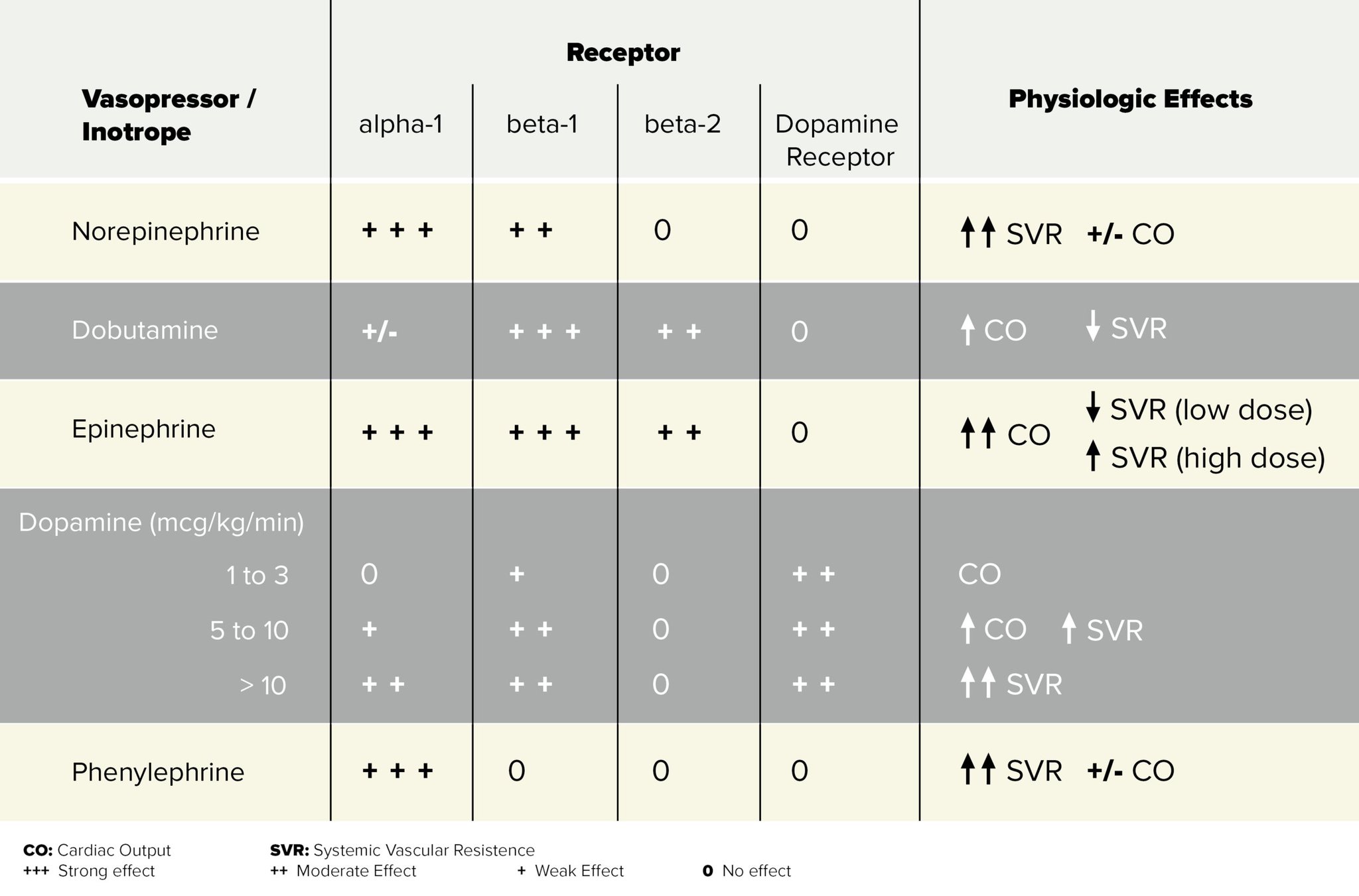
TheLiverDoc on Twitter "10/ vassopressors and inotropes. Vasopressors

Vasopressors and Inotropes Memory Pharm

Vasopressor Chart A Visual Reference of Charts Chart Master

Icu Vasopressor Charts
Related Post: